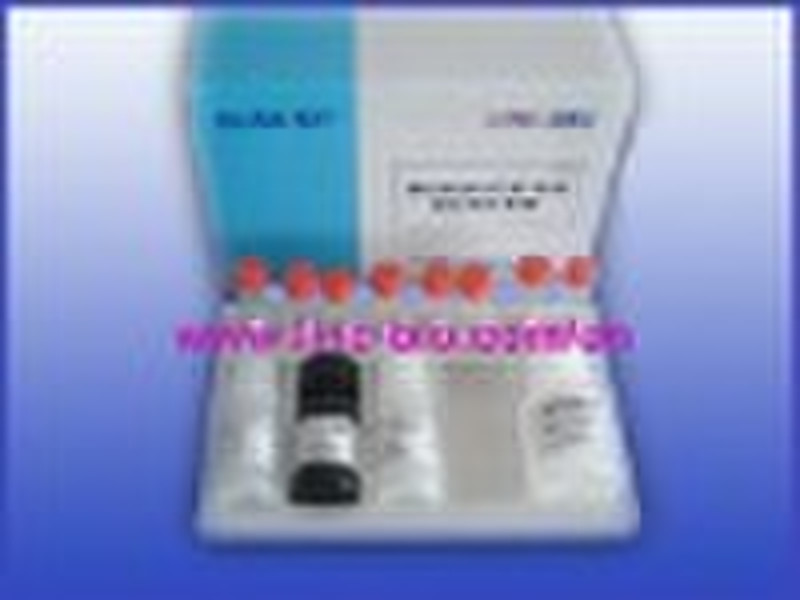
reagents kits:LINC-BIO CA19-9 EIA
original price: 220,00 USD


Chaoling Luo
Contact person
Basic Information
LINC-BIO CA19-9EIACatalog No. L5E1005 Intended use This immunoassay kit allows for the in vitro quantitative determination of tumor associated glycoprotein 199 (CA199) in serum, plasma and other biological fluids. Test principle The LINC-BIO CA 199 ELISA is a solid-phase, non-competitive immunoassay based on the direct sandwich technique. Calibrator, controls and patient samples are incubated together with anti-CA199 monoclonal antibody coated micro titer strips. CA199 present in calibrators, controls or samples is absorbed to the microtiter wells during the incubation. The strips are then washed and incubated with horseradish peroxidase (HPR) labeled anti-CA199 McAb. After washing , a TMB (3,3'5, 5' tetramethyl-benzidine) substrate solution is added to each well and the enzyme reaction is allowed to proceed. During the enzyme reaction a blue colour will develop if antigen is present. The intensity of the colour is proportional to the amount of CA199 antigen present in the samples.The enzyme-substrate reaction is terminated by the addition of a sulphuric acid solution and the color change is measured spectrophotometrically at a wavelength of 450 nm ± 2 nm. Calibration curves are constructed for each assay by plotting absorbance value versus the concentration for each calibrator. The concentration of CA199 in the samples is then determined by comparing the O.D. of the samples to the calibration curve. Materials and components Reagent Quantity Assay plate 1 Calibrators 6 x 500ul With concentrations of 0 U/ml,10 U/ml,30 U/ml,100U/ml,200 U/ml, 400 U/ml. CA199-HRP conjugate 1 x 10ml Wash Buffer (20 x concentrate) 1 x 30ml Substrate Solution 1 x 10ml Stop Solution 1 x 5ml Sample collection and storage Serum - Use a serum separator tube (SST) and allow samples to clot for 30 minutes before centrifugation for 15 minutes at approximately 1000 x g. Remove serum and assay immediately. Plasma - Collect plasma using EDTA or heparin as an anticoagulant. Centrifuge samples for 15 minutes at 1000 x g at 2 - 8° C within 30 minutes of collection. Other biological fluids - Remove particulates by centrifugation and assay immediately. Note: Serum, plasma, and cell culture supernatant samples to be used within 7 days may be stored at 2-8 ° C, otherwise samples must stored at -20° C (≤ 3 months) or -80° C (≤ 6 months) to avoid loss of bioactivity and contamination. Avoid freeze-thaw cycles. When performing the assay slowly bring samples to room temperature. It is recommended that all samples be assayed in duplicate. DO NOT USE HEAT-TREATED SPECIMENS. Assay procedure Allow all reagents to reach room temperature. All the reagents should be mixed thoroughly by gently swirling before pipetting. Avoid foaming. Arrange and label required number of strips. Prepare all reagents, working standards and samples as directed in the previous sections. Add 40 uL of Calibrators, or Sample per well. Cover with the adhesive strip. Incubate for 45mins at 37° C. Aspirate the liquid of each well and wash. repeating the process five times.Wash by filling each well with Wash Buffer (350 uL) using a squirt bottle, multi-channel pipette, manifold dispenser or autowasher. Complete removal of liquid at each step is essential to good performance. After the last wash, remove any remaining Wash Buffer by aspirating or decanting. Invert the plate and blot it against clean paper towels. Add 100 uL of HRP conjugate solution to each well. Incubate for 45 mins at 37°C. Aspirate each well and wash, repeating the process five times for a total of three washes. Refer to step2. Add 100 uL of Substrate Solution to each well. Incubate for 5 minutes at 37°C. Protect from light.Add 50 uL of Stop Solution to each well. If color change does not appear uniform, gently tap the plate to ensure thorough mixing.Determine the optical density of each well within 15 mins, using a microplate reader set to 450 nm.Specificity This assay recognizes recombinant and natural human CA199. No significant cross-reactivity or interference was observed. Sensitivity The minimum detectable dose of human CA199 is typically less than 5 U/ml. Detection Range 10-400 U/ml.
Delivery terms and packaging
Packaging Detail: 50X40X40CM Delivery Detail: 3-5days
Payment term
Telegraphic transfer

-
Payment Methods
We accept: